Gold Steadies Above $4,800, but cannot hold that price as Diplomacy Tempers War Premium

Video section is only available for
PREMIUM MEMBERS
The Gold Forecast | Market Commentary Wednesday, April 15, 2026
Precious Metals · Daily Analysis
Renewed US–Iran negotiations ease energy-driven inflation fears, pulling crude below $90 and dragging the dollar to a six-week low — yet gold's recovery remains partial, and the Fed's silence speaks volumes.
A 6-week low
Gold traded in a $4,840–$4,880 range through Wednesday's session, consolidating the roughly 2% gain posted in the prior session as a fragile but consequential shift in the US–Iran geopolitical landscape gave traders room to breathe. The yellow metal, which remains approximately 10% below its pre-conflict high, is staging a measured recovery — one that hinges almost entirely on whether Washington and Tehran can convert diplomatic signals into a durable ceasefire agreement.
The catalyst for Tuesday's surge — and Wednesday's cautious follow-through — was confirmation that the two governments are working to schedule a second round of peace talks following the collapse of last weekend's negotiations in Pakistan. President Trump signaled openness to ending the confrontation with Iran even if full restoration of Strait of Hormuz navigation is not immediately achieved,
while Iranian President Masoud Pezeshkian indicated willingness to return to the table within the framework of international law. The US naval blockade of Iranian oil exports remains in effect, but the diplomatic temperature has cooled enough to send crude oil retreating below $90 per barrel after threatening to breach $100 just days ago.
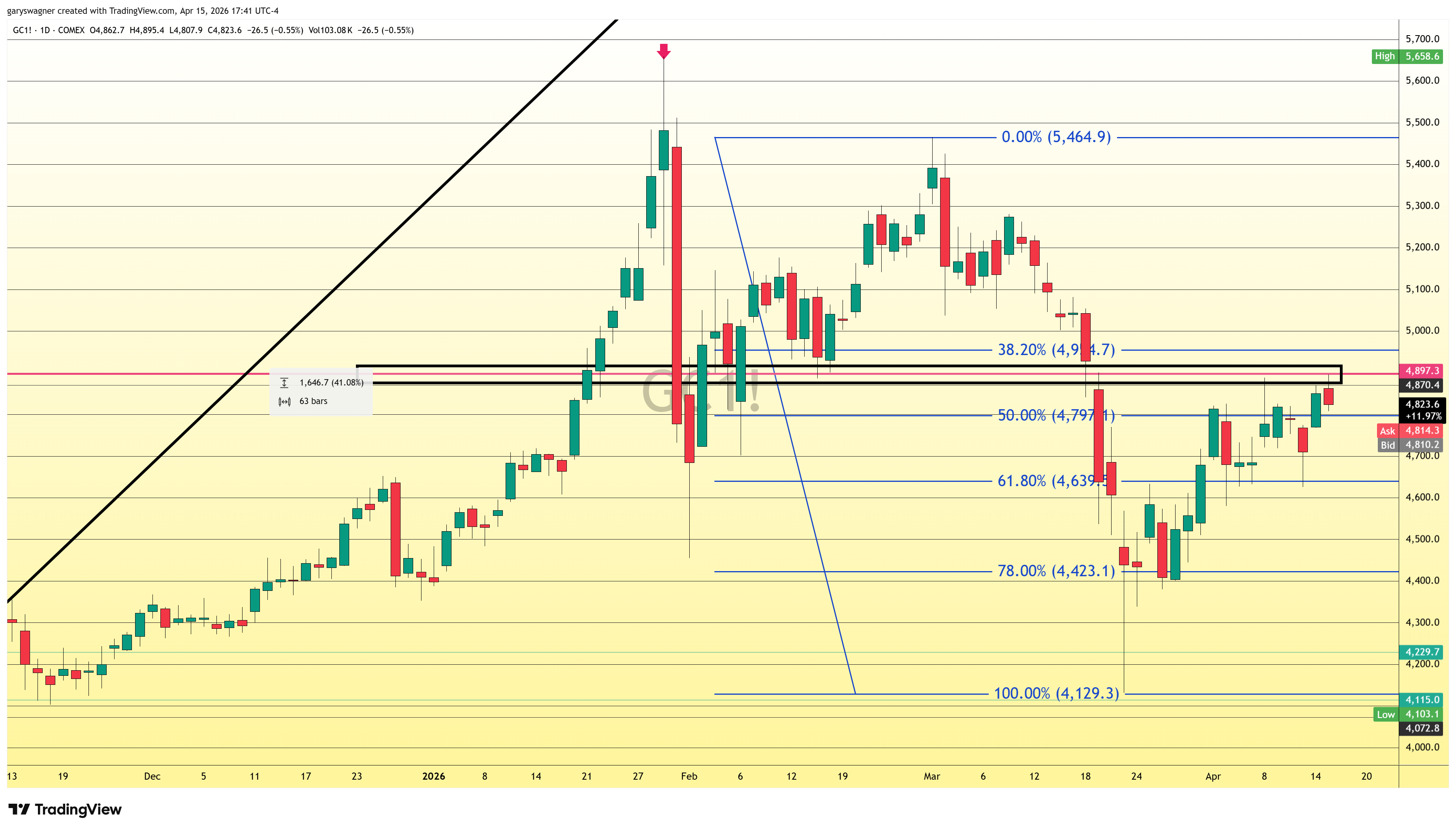
That retreat in crude is the single most important variable for gold right now — and not because of the direct energy-commodity relationship. The real transmission mechanism runs through inflation expectations and Federal Reserve policy.
When oil spiked toward $100, markets were pricing in a stagflation Ary shock that would force the Fed to hold rates at 3.50–3.75% indefinitely — or worse, entertain a hike. With crude pulling back, that fear premium has faded. Markets now assign a nearly 30% probability to at least one Fed rate cut in 2026, though the baseline scenario, with the probability of unchanged rates sitting near 99.5%, remains one of prolonged monetary stasis.
Today also brings the release of the Fed's Beige Book, which will offer regional color on how the energy shock has filtered through the real economy. The April 29 FOMC decision looms as the next major inflection point.
Wishing you as always, good trading,

Gary S. Wagner - Executive Producer