Once again, we see the U.S. dollar dominating price action in the precious metals. With the exception of gold, metals including silver, platinum, and palladium all traded higher on the day. Palladium scored the highest gains by far and, even with the dollar strength, was able to close up $16.40 on the day for a 1.42% gain with futures fixed at $1,175.10.
In light of an extremely strong U.S. dollar, gold is holding up quite well today. We only need to look at the KGX (Kitco Gold Index) to illustrate that point. As of 5:00 PM Eastern Standard Time, spot gold is currently fixed at $1,243.30, which is a net decline of $4.40 on the day. Today’s decline is 100% the direct result of a strengthening U.S.
Today’s jobs report, certainly the most significant economic data to come out this month, came in well under analyst expectations with 155,000 new jobs being added in the month of November. Analysts had projected that 200,000 new jobs were added last month.
U.S. equities once again traded under tremendous pressure, down almost 800 points at the intraday low today. The Dow Jones Industrial Average has traded to a low which amounted to a 1,500 point drop this week before recovering in the afternoon session.
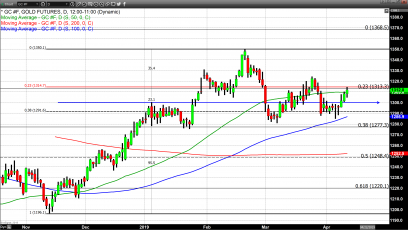
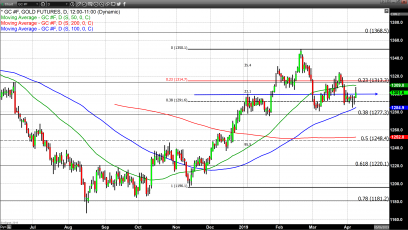
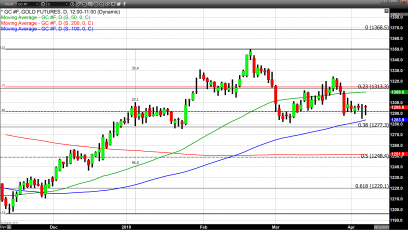
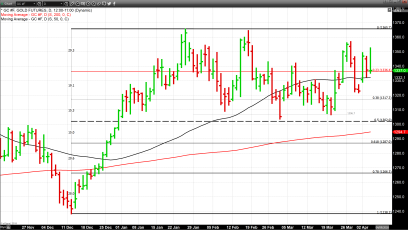
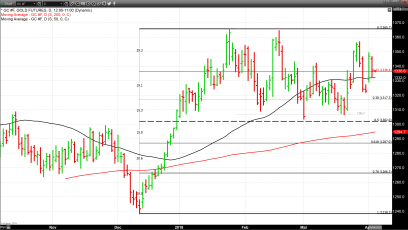
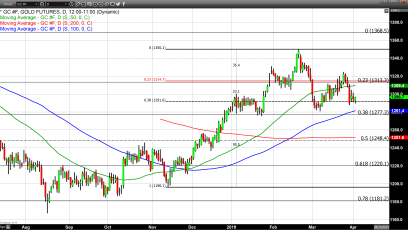
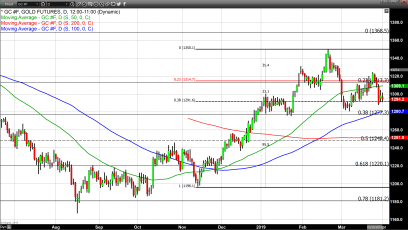
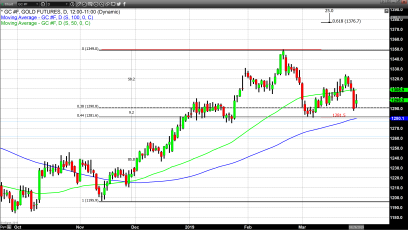
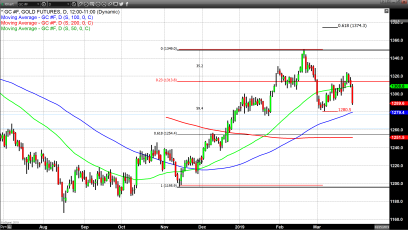
As of 5:15 Eastern Standard Time, gold futures are fixed at $1,242.80, which is a net decline of $3.80 (-0.31%) on the day. After trading above $1,246 yesterday, gold pricing found resistance at the 50% Fibonacci retracement and began to trade lower.
Within the final 10 minutes of trading, as traders watched the U.S. equities markets close, the Dow Jones industrial average plunged almost 800 points as it traded to an intraday low today of 25,008. When the dust settled, the Dow had lost 799.36 points, with a net decline of over 3%, and settled at 25,027.07.
The face-to-face meeting held by the presidents of both the United States and China resulted in some real forward movement. Both countries have decided to begin a formal truce for the next 90 days. During this time no new additional tariffs will be added on either side.
Investors and market participants will be focused intently on tomorrow’s face to face meeting between U.S President Donald Trump and Chinese President Xi Jinping at the G20 summit taking place in Buenos Aires, Argentina.
It seems that the Federal Reserve has modified their monetary policy in regards to their current program of quantitative normalization. Beginning in 2015, the Fed ended their quantitative easing policy which flooded the market with almost interest-free capital as the Fed’s balance sheet swelled to just over $4.5 trillion.