At the center of a contracting GDP which is putting tremendous stress on the American economy is the Federal Reserve’s mission statement of taking inflation down to 2%. The problem stems from the fact that the Federal Reserve did not act as inflation began to spiral out of control in 2022 when inflation was above 8% while the Federal Reserve maintained its benchmark rate between 0% and ¼%.

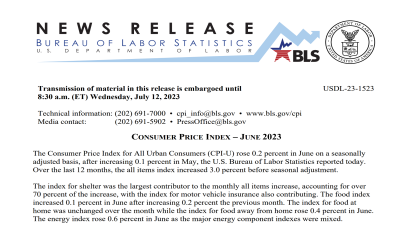
Today the US Labor Department released the Consumer Price Index for April. The report revealed that the CPI rose 0.4% in April, matching estimates from economists polled by the Wall Street Journal. The monthly increase in April was four times the uptick of 0.1% in March.

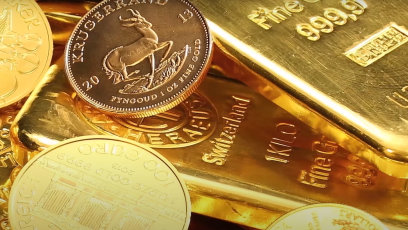
Gold pricing has been rising ever since last Friday’s strong jobs report resulted in prices plunging $34 from its open to the close. Last Thursday gold futures traded to an intraday high of $2085. However, gold closed well off of that high settling at $2055 per ounce. The following day gold opened just above Thursday’s close at approximately $2057 and after dropping $34 closed at $2024.

Speaking on ABC’s “This Week” on Sunday U.S. Treasury Secretary Janet Yellen said that negotiations in regards to raising or suspending the debt ceiling should not take place “with a gun to the head of the American people”.

Today the U.S. Labor Department released the nonfarm payroll jobs report which revealed that the labor market is robust as well as resilient considering the massive campaign by the Federal Reserve to slow the economy by raising rates to over 5% in just over a year.

Gold futures have traded almost $100 higher from Tuesday’s open to today’s intraday high. Gold opened at approximately $1990 on Tuesday and closed at approximately $2022 after factoring in a daily gain of over $30. Yesterday gold had a moderate gain moving the most active June contract to an intraday high of $2049 and closing at approximately $2037.

The Federal Reserve concluded this month’s FOMC meeting and as expected the Fed raised its terminal rate by ¼%. This takes the Fed benchmark rate to between 5% and 5 ¼%. Most importantly, after 10 consecutive rate hikes the Fed signaled that they may finally enact a pause of further rate increases at the next FOMC meeting in June.

With the FOMC meeting to conclude tomorrow the Federal Reserve will most likely announce a ¼% rate hike and attention has shifted away from the Fed as market participants focus on other potential calamities within the financial markets.

In a letter to House Speaker Kevin McCarthy as well as other bipartisan leaders Treasury Secretary Janet Yellen said that the United States could breach its debt ceiling as soon as June 1.

The BEA (Bureau of Economic Analysis) released the Personal Consumption Expenditures (PCE) for March indicating that inflation remains elevated but its advance is slowing down on a month-over-month and year-over-year basis.