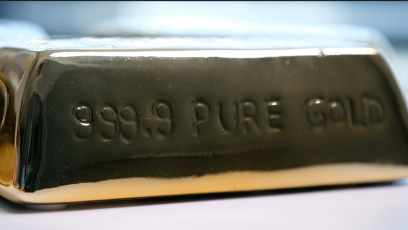
Today is the perfect example of how enhanced inflationary pressures and the reaction to higher inflation by the Federal Reserve create cross-currents that take gold higher as well as pressure pricing lower. Gold futures basis most active December contract opened today at $1783.70.

Gold futures are trading modestly lower with dollar strength being the primary force taking the precious yellow metal lower. As of 4:45 PM EDT gold futures basis most active December 2021 contract is down two dollars, or -0.11% and is fixed at $1782.10. Concurrently spot or Forex gold is currently jumping between fractional losses and fractional gains.

In real estate many agents and investors say the three most important things to the value of a property are location, location, location. A similar case can be made for gold with one of the keys and most important elements to price changes being inflationary pressures. Today it was concerns about inflationary pressures that took gold moderately higher.

Gold pricing continues to be affected by rising yields in U.S. 10-year Treasury notes. Market sentiment continues to be under the assumption that as early as mid-November the Federal Reserve will begin to taper their asset purchases of $120 billion monthly. The most recent news is the pace at which they will taper.

A combination of events collectively has put tremendous bearish pressure on gold pricing. At least for today, the combination of all of these events has resulted in a perfect bearish scenario causing a $30 drop-in gold futures. As of 5:10 PM EDT, the most active December 2021 futures contract is currently fixed at $1768.10, a net decline

For the first time in six weeks, gold has flirted with $1800 per ounce. The last time gold effectively challenged $1800 was during the week of August 23, when gold opened at $1780 and then closed at $1820. On the week of August, 30 gold traded to a high of $1837 and closed at $1820.

The government released the inflationary report for September today vis-à-vis the CPI (Consumer Price Index), which showed that inflation continues to increase. In July of this year, the consumer price index reached an apex of 5.4% and then decreased to 5.3% in August. Today’s report shows that inflationary pressure is now back to 5.4% year over year.

Tomorrow the U.S. Bureau of Labor Statistics will release the most current inflationary data. Two primary metrics are used to reveal inflationary pressures. First is the CPI, or Consumer Price Index.

Gold prices continue to drift lower as the U.S. dollar continues to gain strength and market sentiment favors the high likelihood that the Federal Reserve will continue on its course to begin tapering is to asset purchases as early as November of this year.

On the surface, a much weaker than anticipated jobs report was perceived as an underlying bullish factor in gold. However, today gold closed lower, giving back early gains as market participants digested today’s additional jobs added in September.